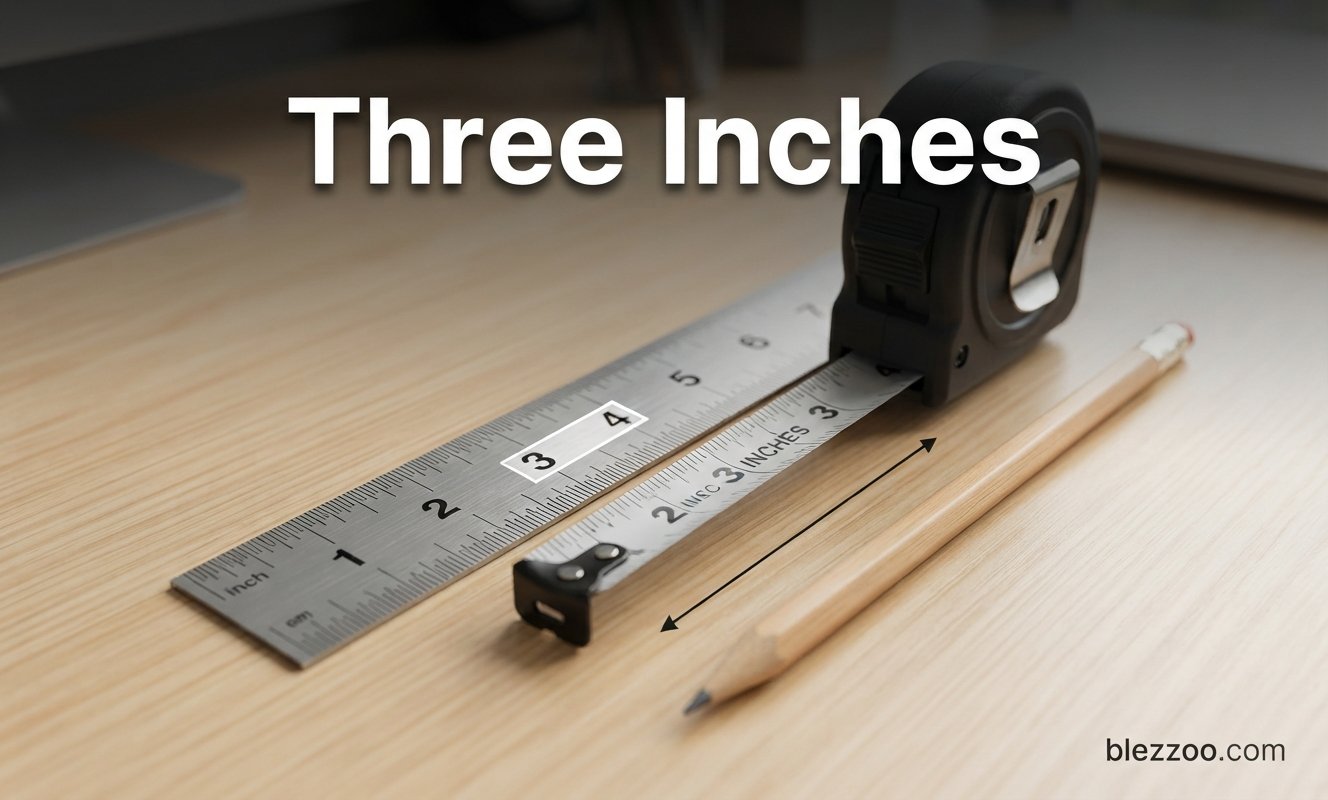
Understanding a small measurement can be surprisingly difficult when you cannot picture its actual size. Whether you are measuring an object, checking a product dimension, or estimating a haircut, knowing this length makes everyday tasks easier.
This guide explains the measurement through ruler markings, familiar household objects, hand comparisons, and simple conversion methods. You will also learn how to estimate it without measuring tools and avoid common measuring mistakes.
The Three Inches Conversion Numbers (All in One Place)
Three inches is a short but useful length in everyday measurements. It is equal to 7.62 centimeters, making it easy to understand when using the metric system.
Here are the most important conversions:
| Measurement Unit | Equivalent |
| Inches | 3 inches |
| Centimeters | 7.62 cm |
| Millimeters | 76.2 mm |
| Feet | 0.25 ft |
| Yards | 0.0833 yd |
| Meters | 0.0762 m |
Quick conversion facts:
- 1 inch = 2.54 centimeters.
- 3 inches = 76.2 millimeters.
- 12 inches = 1 foot.
- 3 inches = one-quarter of a foot.
To convert inches into centimeters, multiply the measurement by 2.54. For example, 3 × 2.54 gives you 7.62 centimeters.
This conversion is particularly helpful when shopping online, following craft instructions, measuring furniture, or comparing product dimensions from different countries.
3 Inches on a Ruler Exactly Where It Falls
A standard ruler makes measuring this length straightforward. Most rulers display inches along one edge, with smaller markings representing fractions of an inch.
To locate the correct measurement:
- Place the ruler on a flat surface.
- Find the zero-inch marking.
- Move your eyes along the ruler toward the right.
- Stop at the large number 3.
- The distance between zero and three represents the required length.
Important measuring tip: Always begin at zero rather than the physical edge of the ruler because some rulers have a small blank space before the first marking.
A ruler divided into sixteenths or eighths of an inch provides smaller measurement intervals. However, you only need the main number 3 to identify this particular length.
What 3 Inches Feels Like in Your Hand
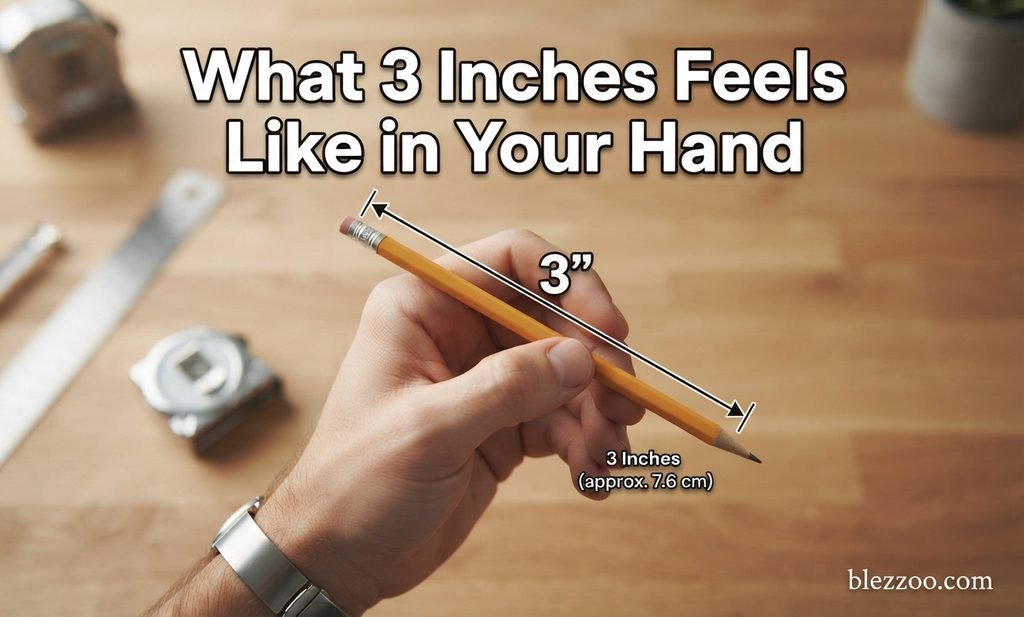
A hand can provide a useful visual reference when a ruler is unavailable. However, hand sizes differ considerably, so this method should only be treated as an estimate.
Imagine a length extending across part of your palm or the width of several fingers placed together. This gives you a rough physical impression of the distance.
Here are a few ways to visualize it:
- Approximately the width of three adult finger widths, depending on finger size.
- A little longer than the width of many adult palms.
- Similar to the length of a small everyday accessory.
- Roughly the distance between the tips of your thumb and another finger when spread moderately.
The easiest way to understand this measurement is to compare it with an object you already know. Familiar references make estimating small dimensions much easier.
13 Daily-Use Things That Are 3 Inches
Everyday objects can help turn an unfamiliar measurement into something recognizable. Some items below are close to this size, while others vary by manufacturer, design, or model.
The following comparisons are useful visual references rather than guaranteed exact measurements.
Post-it Note
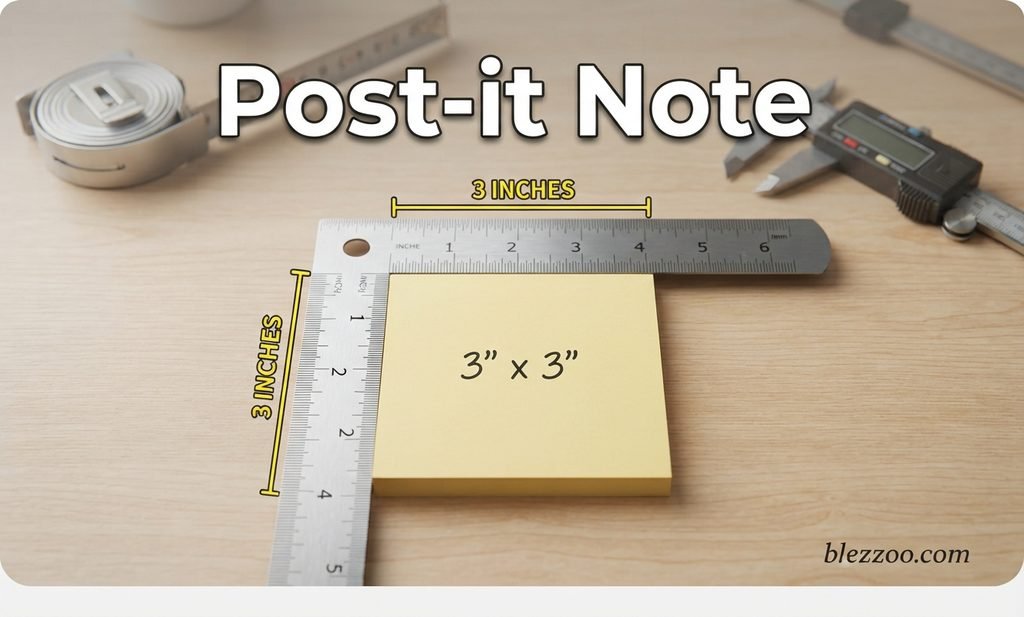
Common size: 3 × 3 inches
A standard 3-by-3-inch Post-it note is one of the easiest examples to remember. Its square shape provides a direct visual representation of the measurement along each side.
It is commonly used for reminders, quick notes, and organizing study materials.
Standard Drink Coaster

Many drink coasters measure approximately 3.5 to 4 inches across, although smaller designs are available.
A smaller coaster measuring around 3 inches provides a useful comparison. Its circular shape also helps demonstrate how the same measurement can describe a diameter rather than a straight object length.
Jumbo Paperclip
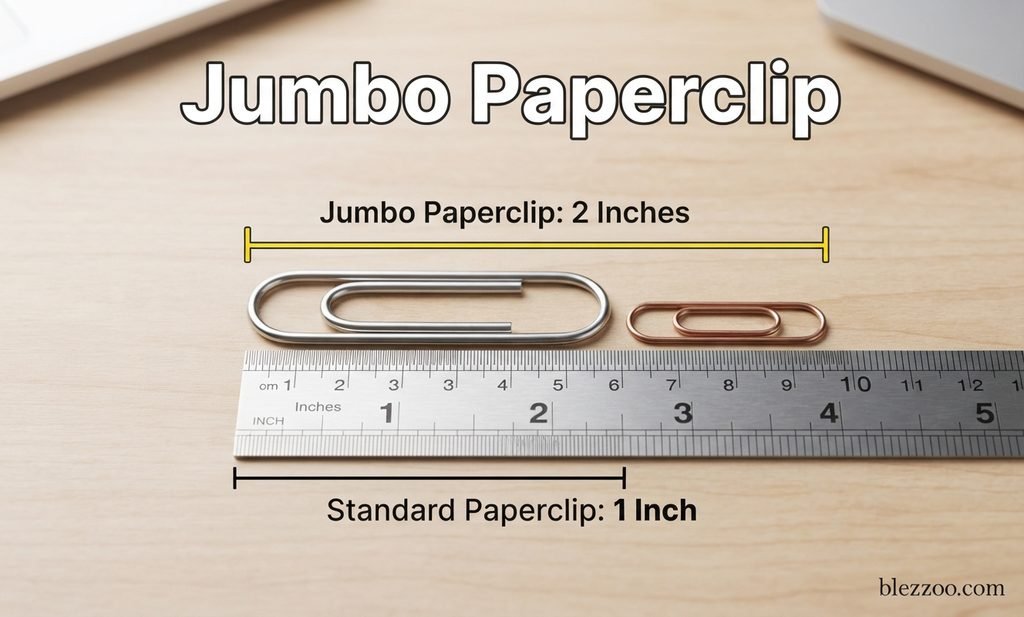
A jumbo paperclip is generally longer than a regular paperclip, with its size varying between brands.
Some larger designs approach the 3-inch range. It is a practical office supply to use when estimating small lengths, but checking its actual dimensions is important.
3-Ounce TSA Travel Bottle
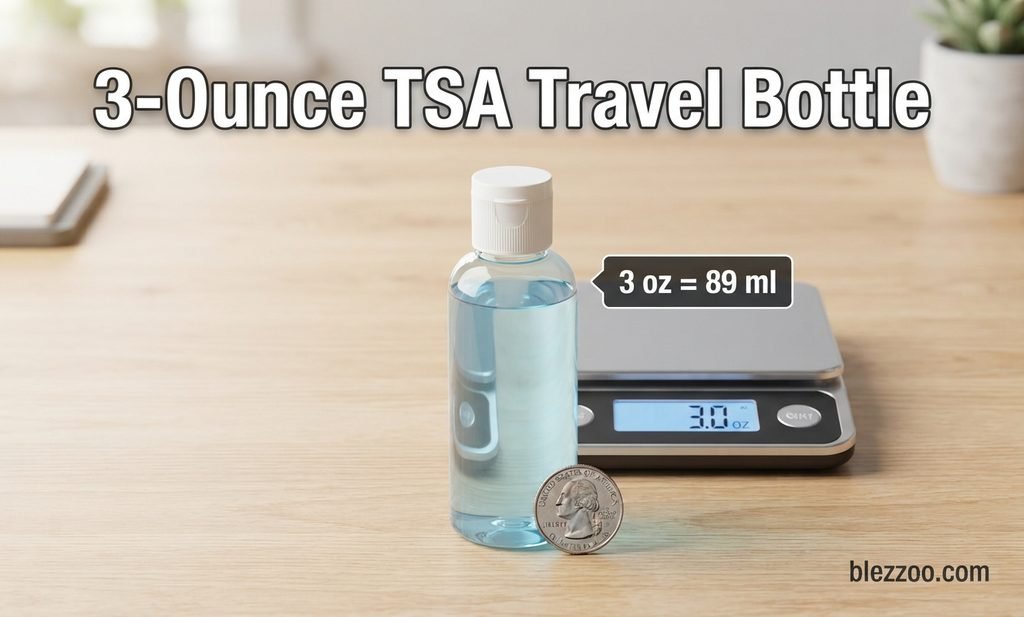
Small travel bottles are popular for carrying shampoo, lotion, and other personal-care products.
A 3-fluid-ounce bottle refers to its liquid capacity, not its physical height. Some bottles may stand around 3 inches tall, while others are considerably taller or shorter.
Box of Kitchen Matches

A small matchbox is another familiar household reference. Many compact boxes are around a few inches long, depending on their design.
A matchbox can help you visualize a short measurement, but its length should not be assumed to be exactly 3 inches.
Credit Card — Long Edge
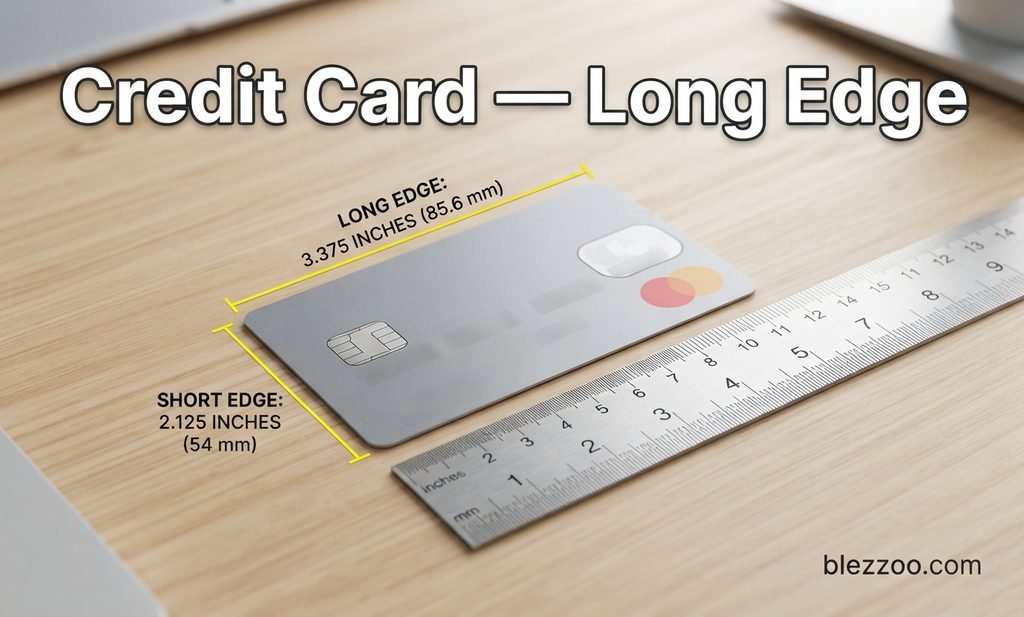
A standard credit card measures approximately 3.37 inches along its longer edge.
That makes it slightly longer than the measurement discussed here. It is still a convenient comparison because most people are familiar with the size of a payment card.
Smartphone Diagonal Length
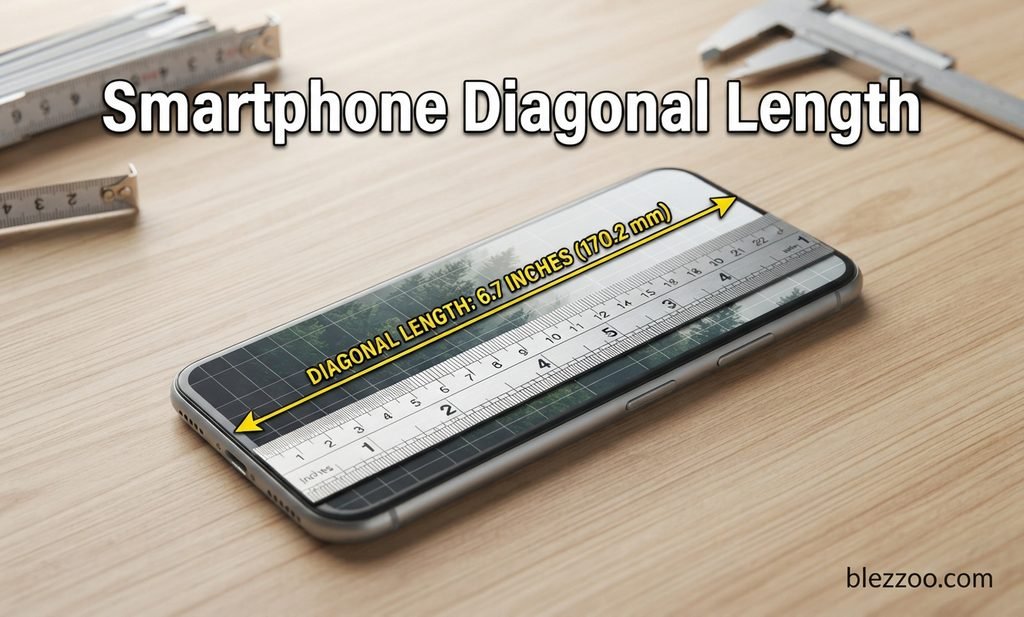
Smartphone dimensions vary widely depending on the screen and overall device design.
A 3-inch diagonal measurement may describe a small screen or part of a larger phone. Modern smartphones generally have much larger screens, so this comparison is best treated as a specific dimension rather than a typical phone size.
Wall Light Switch Plate
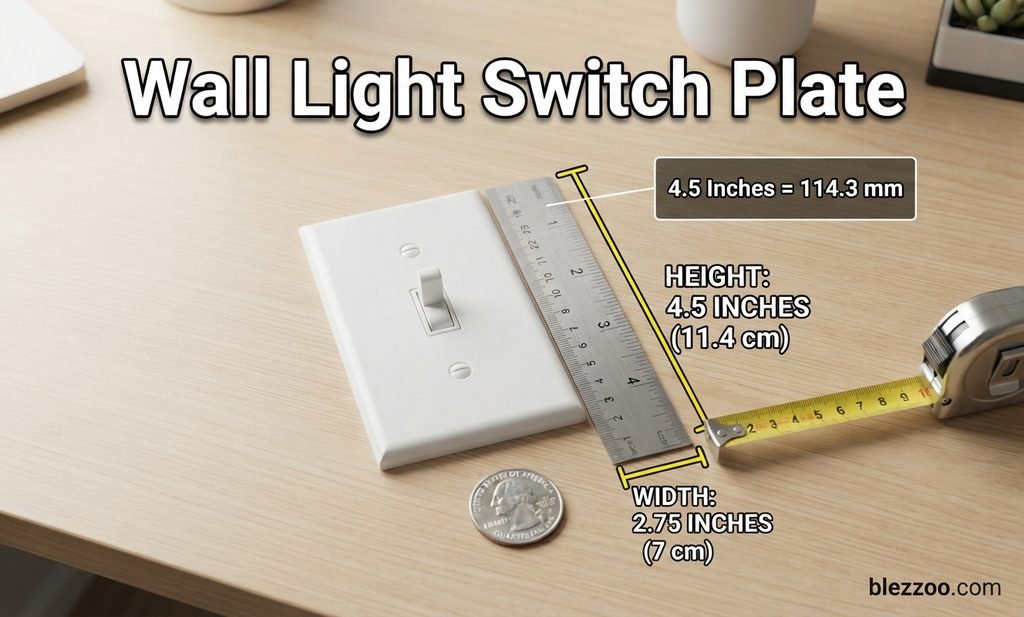
A common light switch plate is often around 2.75 inches wide and 4.5 inches tall.
Its width is therefore close to the measurement being discussed. You can use the shorter side as a helpful household comparison.
Eyeglass Repair Screwdriver
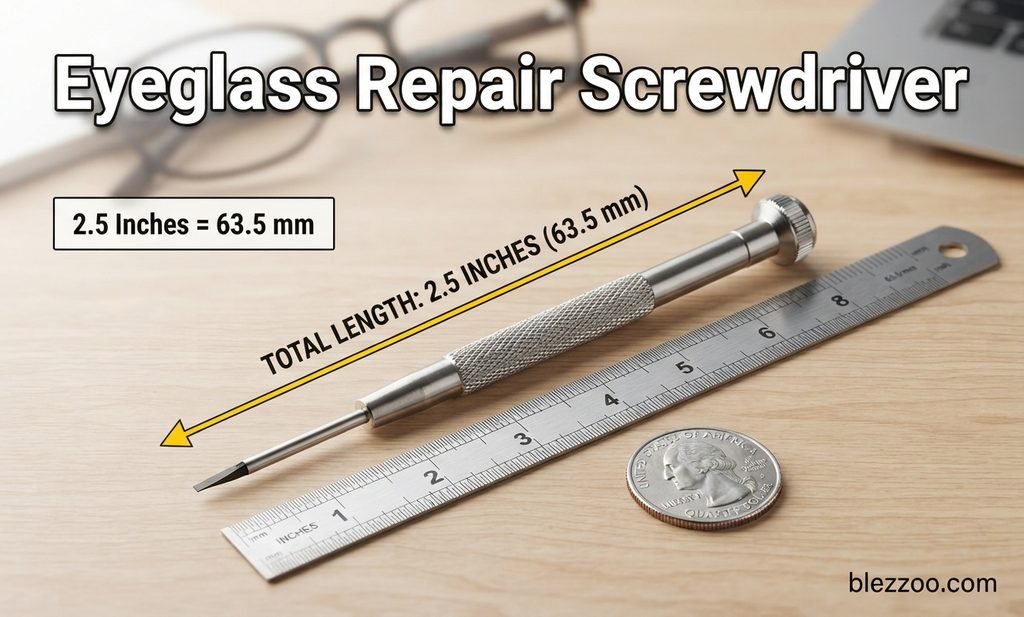
Small eyeglass repair screwdrivers are designed for handling tiny screws and delicate components.
Some compact versions have handles or working sections close to 3 inches long. Their overall dimensions depend on the manufacturer and screwdriver style.
Mini Donut or Small Bagel
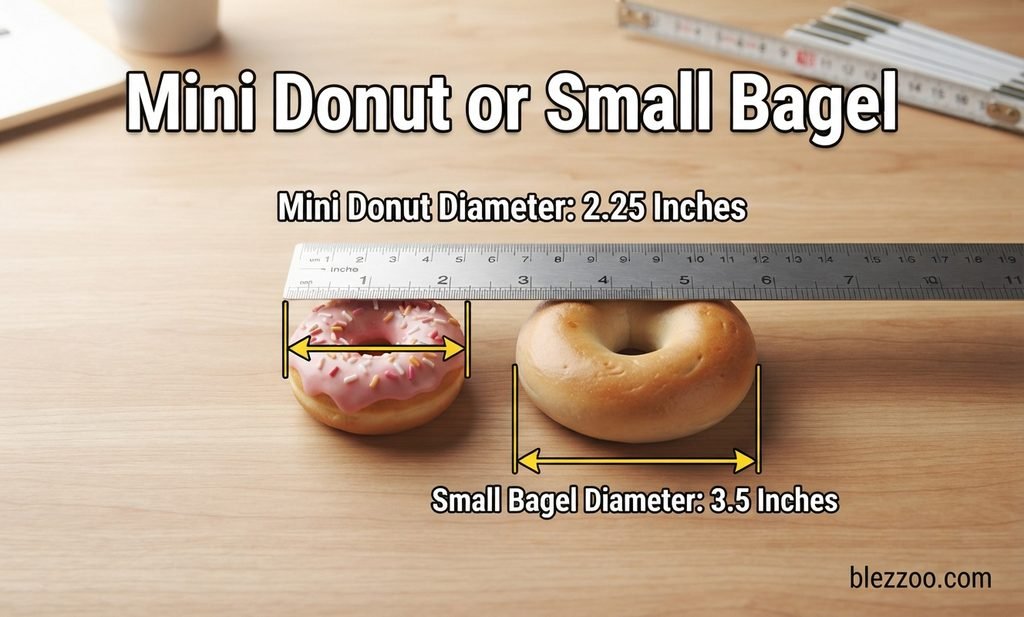
A mini donut or small bagel can measure approximately 3 inches across.
Food sizes are not standardized, so the diameter changes depending on the bakery, recipe, and portion size. Still, these foods offer an easy visual reference.
Spam Can Narrow Side
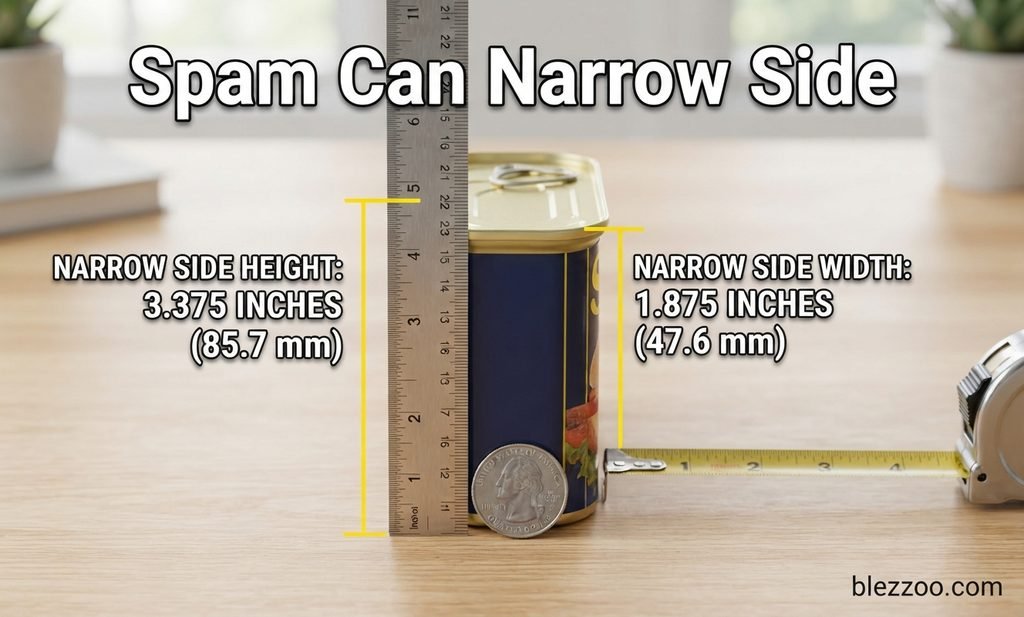
A standard rectangular can of SPAM has a narrow dimension close to 3 inches, depending on the exact packaging measurements.
This makes its shorter side a recognizable kitchen reference. Always check the product specifications if an exact measurement matters.
Read more information on : 8mm Size
Pink Pearl Eraser (Brand New)
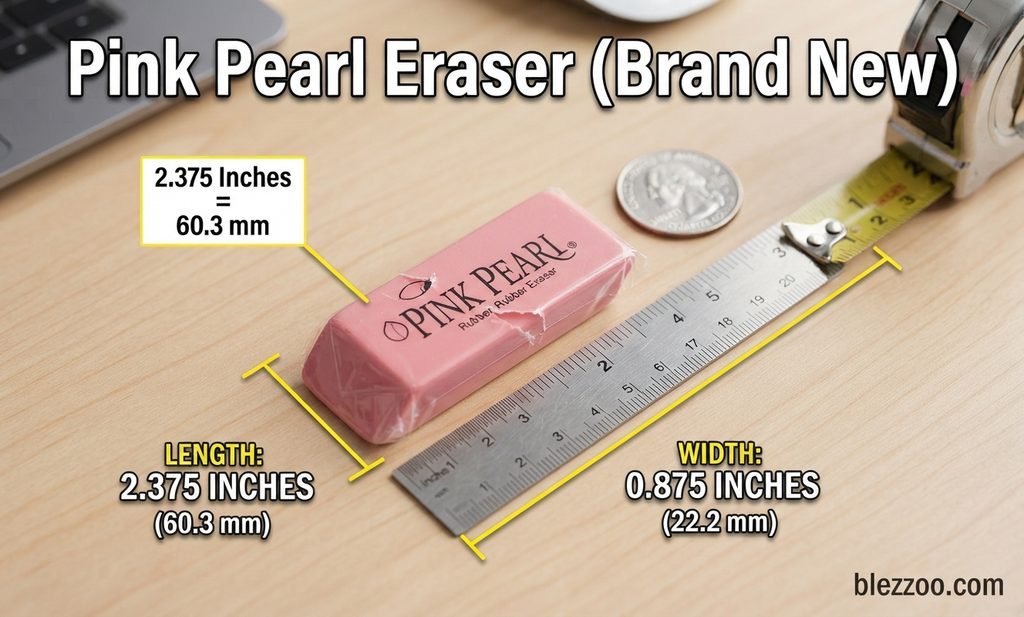
A Pink Pearl eraser is a familiar school supply, but its dimensions vary by model.
Some versions are shorter than 3 inches, making them a rough comparison rather than an exact reference. Its rectangular shape makes it easy to compare against a ruler.
Jumbo Bobby Pin
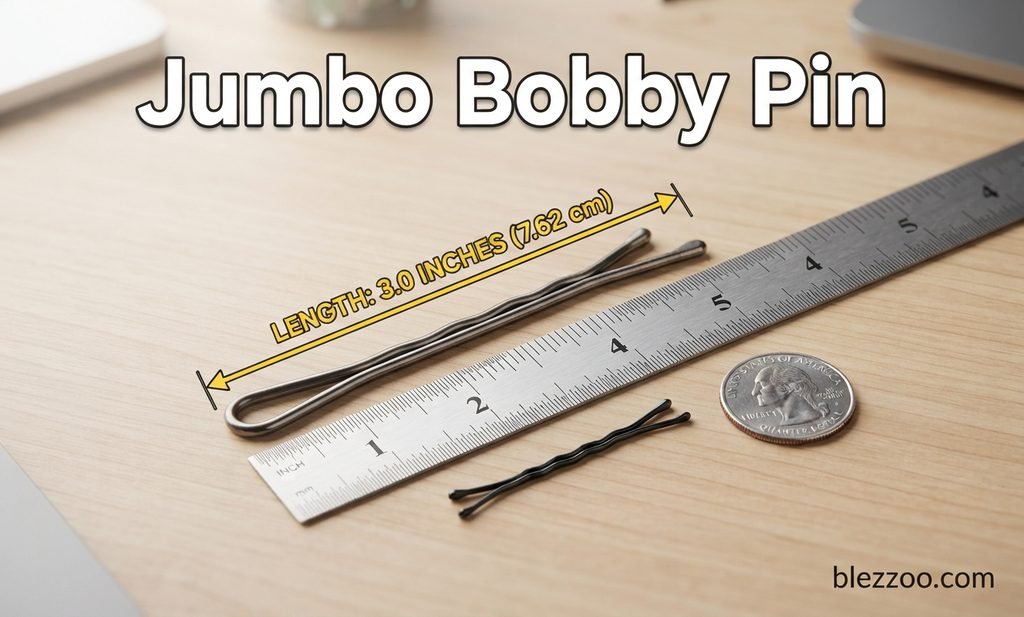
Jumbo bobby pins are available in different lengths, and some versions measure approximately 3 inches.
Their long, narrow shape makes them especially useful for visualizing a straight distance. Check the packaging if you need a precise size.
Measuring 3 Inches Without a Ruler
You do not always need a measuring tool to estimate a small distance. Several household objects can help you create a reasonably accurate visual reference.
Here are some practical methods:
- Use a credit card: Remember that its long edge is approximately 3.37 inches, slightly longer than the target.
- Use your fingers: Place three fingers side by side and compare their combined width.
- Use a sticky note: A standard 3-by-3-inch note provides a convenient reference.
- Use a smartphone: Compare the desired length with a known phone dimension.
- Use a piece of paper: Mark a starting point and estimate the required distance using a familiar object.
The accuracy of these methods depends on the size of the objects you use. For precise work, a ruler or measuring tape remains the better choice.
The following table summarizes how useful different methods are when estimating this length.
| Measuring Method | Accuracy |
| Standard ruler | Very high |
| Measuring tape | Very high |
| 3 × 3 sticky note | High |
| Credit card | Approximate |
| Finger width | Low to moderate |
| Smartphone comparison | Depends on model |
Practical advice: If you need Three Inches for cutting, crafting, furniture installation, or another precise task, avoid relying entirely on visual estimation.
3 Inches of Hair What It Actually Looks Like
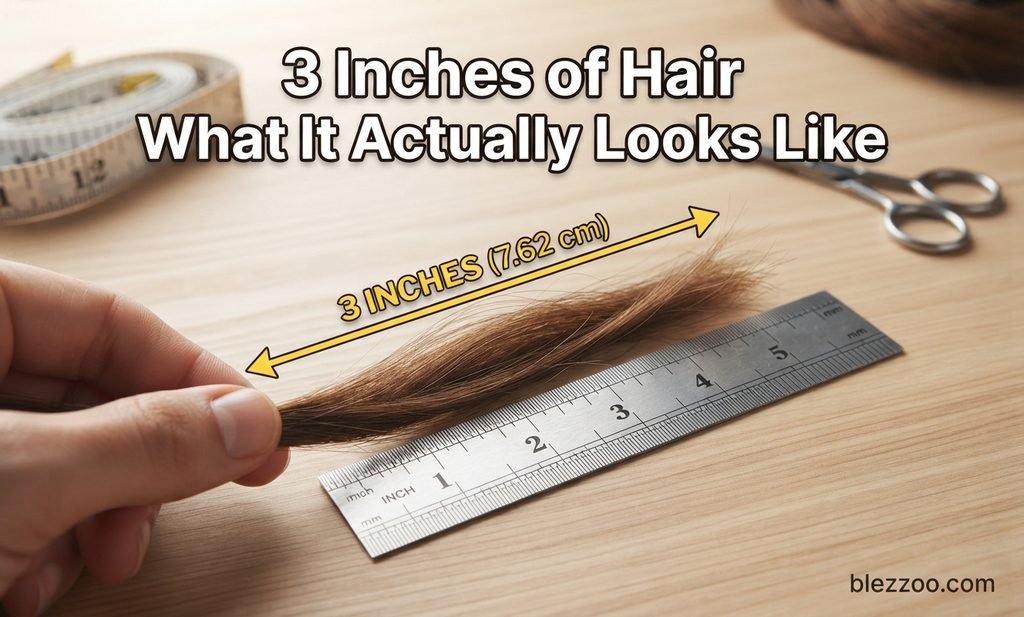
Hair length can be difficult to imagine because individual strands naturally bend, curl, and move. Three inches of hair represents approximately 7.62 centimeters when measured in a straight line.
For straight hair, this length is relatively easy to identify. It may extend a few inches from the scalp or create a noticeable change when trimming longer hair.
For curly or wavy hair, the visible length can appear shorter because the strands naturally coil.
Here is what to expect:
- Straight hair: The full measured length is usually visible.
- Wavy hair: Natural bends can make the hair appear slightly shorter.
- Curly hair: Curl patterns can hide some of the actual strand length.
- Coily hair: Shrinkage can make the visible length considerably shorter.
When measuring a haircut, gently stretch one strand without pulling excessively. Measure from the starting point to the tip rather than estimating based on the overall hairstyle.
Three Inches can make a noticeable difference when trimming bangs, shaping layers, or shortening long hair. However, the visual result depends on hair texture, density, and styling.
Two Mistakes People Make Measuring This Length
Small measurement errors can create surprisingly different results. Understanding common mistakes helps you get more reliable measurements.
1. Starting From the Wrong Point
One frequent mistake is measuring from the physical edge of a ruler instead of its zero marking.
Some rulers have a small gap before the first measurement line. Starting at the edge can therefore produce an inaccurate result.
Solution: Always align the object with the zero-inch marking before measuring.
2. Confusing Approximate Size With Exact Size
Another common mistake is assuming that familiar objects have standardized dimensions.
For example, credit cards, paperclips, matchboxes, and drink coasters come in different sizes. Even products that look identical can have slightly different measurements.
Solution: Use everyday objects for rough comparisons, but verify important dimensions with a ruler or measuring tape.
FAQs
Is Three Inches considered a short length?
Yes, it is generally considered a small measurement.
How many centimeters are Three Inches?
7.62 centimeters.
How many millimeters are Three Inches?
76.2 millimeters.
Is Three Inches one-quarter of a foot?
Yes, exactly.
Can I measure Three Inches with my fingers?
Yes, but finger sizes make this method approximate.
Conclusion
Understanding small measurements becomes much easier when you connect numbers with familiar objects. Three Inches is equal to 7.62 centimeters or 76.2 millimeters, making it simple to convert between measurement systems.
Remember these important points:
- Three Inches equals one-quarter of a foot.
- Three Inches can be identified easily on a standard ruler.
- Three Inches is approximately the width of a standard 3-by-3 sticky note.
- Three Inches is useful for understanding small household dimensions.
- Three Inches of hair can look different depending on its texture.
- Three Inches should be measured from the zero marking for accuracy.
- Three Inches can be estimated with everyday objects, but exact measurements require proper tools.
Read more information on : How Far Is 200 Feet







2 thoughts on “Three Inches: The Surprising Truth About This Small Length”