
The 8mm Size can be difficult to picture when you only see the number on a product label. Understanding the 8mm Size starts with relating the number to a familiar object.
Eight millimeters is less than one centimeter, but it appears in many everyday contexts, from jewelry and clothing details to film and hardware. The 8mm Size is therefore useful in both everyday comparisons and technical descriptions.
Quick Reference: 13 Things That Are 8mm
The quickest way to understand the 8mm Size is to connect it with objects you may already have at home. This 8mm Size reference list separates exact examples from approximate ones.
| Object | Dimension to compare | How close is it? |
| Medium plastic drinking straw | Opening diameter | Some straws are around 8mm |
| Men’s wedding band | Band width | 8mm is a common width option |
| BIC Cristal pen cap | Width or diameter | Check the specific cap |
| Large chickpea | Width | Some may approach 8mm |
| Blueberry | Diameter | Small berries may be near 8mm |
| Small shirt button | Diameter | 8mm buttons are available |
| USB Type-C plug metal shroud | Overall width | Similar small-scale reference |
| 8mm film strip | Film width | Exactly 8mm nominally |
| Snap fastener | Cap diameter | Small sizes can be close |
| Adult pinky fingernail | Nail width | Varies by person |
| Cultured pearl | Pearl diameter | 8mm is a common jewelry size |
| M5 hex nut | Width across flats | Common standard is 8mm |
| Masonry wall plug | Plug diameter | 8mm plugs are widely sold |
How to Read These Comparisons
For a quick visual estimate, the 8mm Size is close to the width of a small button or the diameter of a modest pearl. A comparison is only useful when you know which dimension is being measured.
For example, a ring’s width is measured across its band, while a pearl’s size is its diameter. Keep in mind that food, fingernails, and manufactured products can vary.
The 13 Objects Up Close
The 8mm Size becomes more recognizable when you examine each object and identify the exact part that is close to this measurement. Each comparison gives the 8mm Size a real-world context.
Medium Plastic Drinking Straw
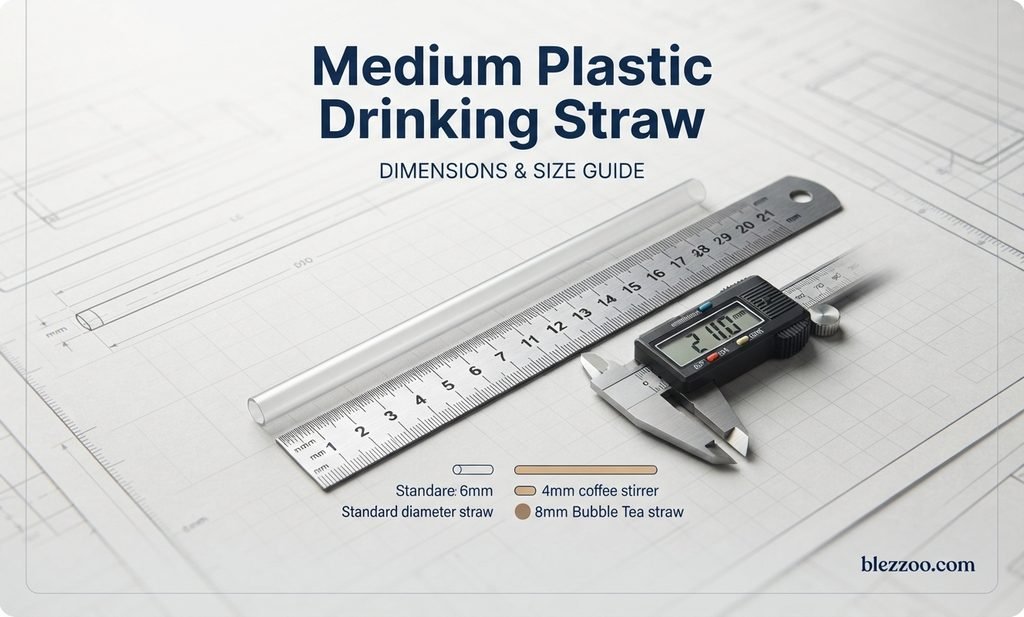
A medium drinking straw can offer a simple comparison when its opening is close to eight millimeters across. Straw diameters differ by brand and purpose, so not every standard straw will match.
Look at the circular opening from directly above. Its diameter is the measurement to compare, not the straw’s length.
Men’s Wedding Band Width

An 8mm wedding band is a popular wider style that creates a noticeable strip across the finger. Ring widths vary, and an 8mm option is generally broader than many slim bands.
This is a useful jewelry example because manufacturers often list band width in millimeters. If you are shopping, check the width separately from the ring’s size, which describes the finger circumference or diameter.
Standard BIC Cristal Ballpoint Pen Cap

A BIC Cristal pen is a familiar stationery item, but its cap should be treated as an approximate visual reference rather than a guaranteed 8mm standard. Cap dimensions can differ by model and by the point where you measure.
If you have one nearby, measure across the cap at its widest point. This shows why checking the exact dimension is better than assuming every pen cap is identical.
Large Chickpea
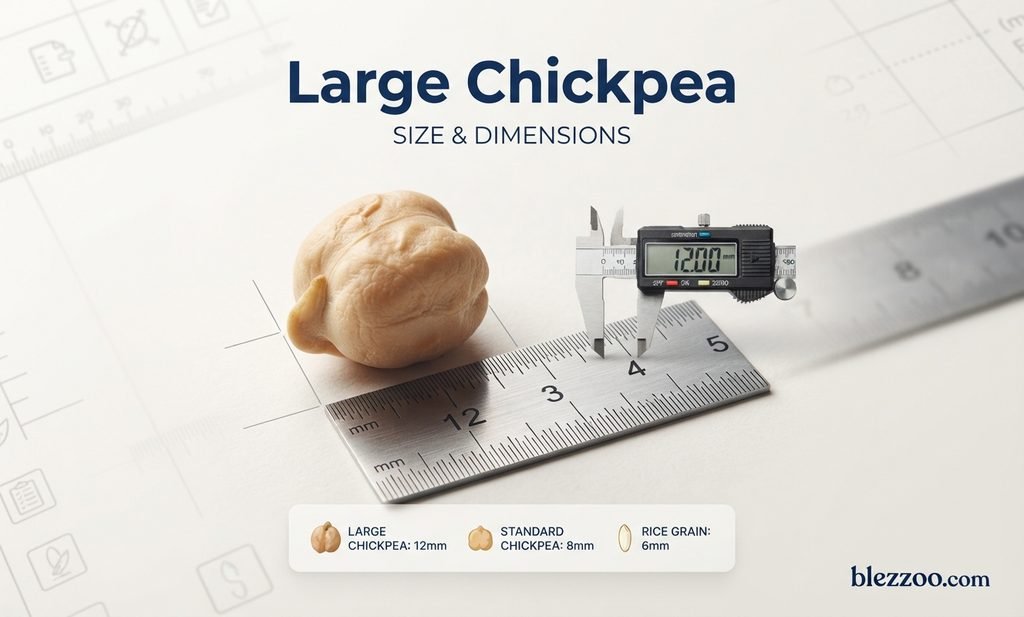
A large chickpea may approach eight millimeters across, although chickpeas vary in size, shape, and variety. Some are noticeably wider, while smaller ones may be narrower.
Use the widest part of the chickpea for a fair comparison. Because it is a natural food item, it is best viewed as an estimate rather than a precise reference.
Blueberry
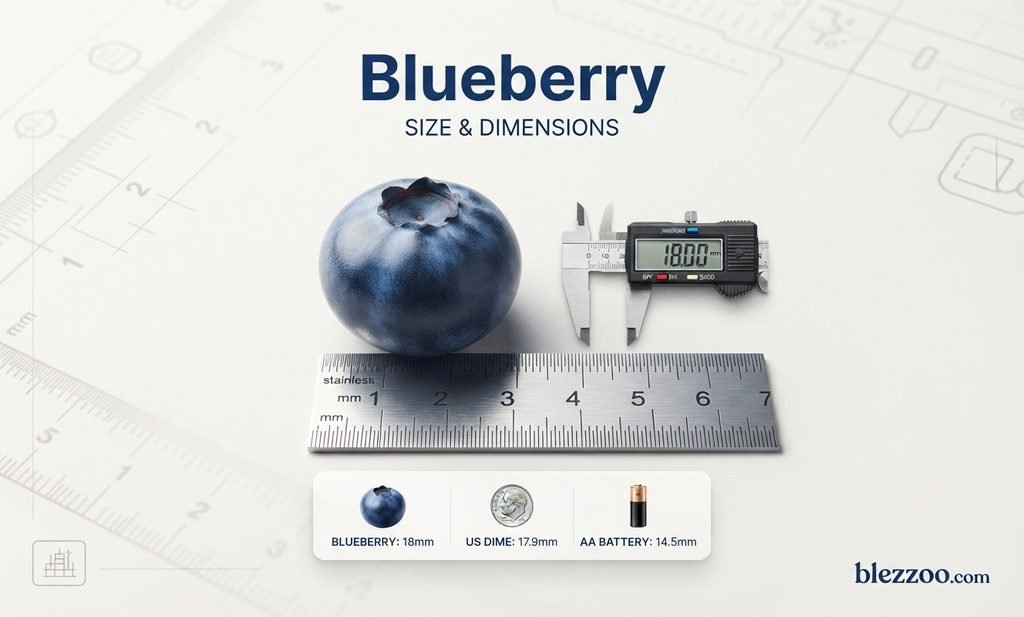
A small blueberry can provide another rounded comparison. Blueberries come in many sizes, and some smaller berries may be close to eight millimeters in diameter.
Place the berry beside a ruler if you need an accurate result. Its round shape helps you imagine the width, but it should not replace a measurement.
Small Shirt Button
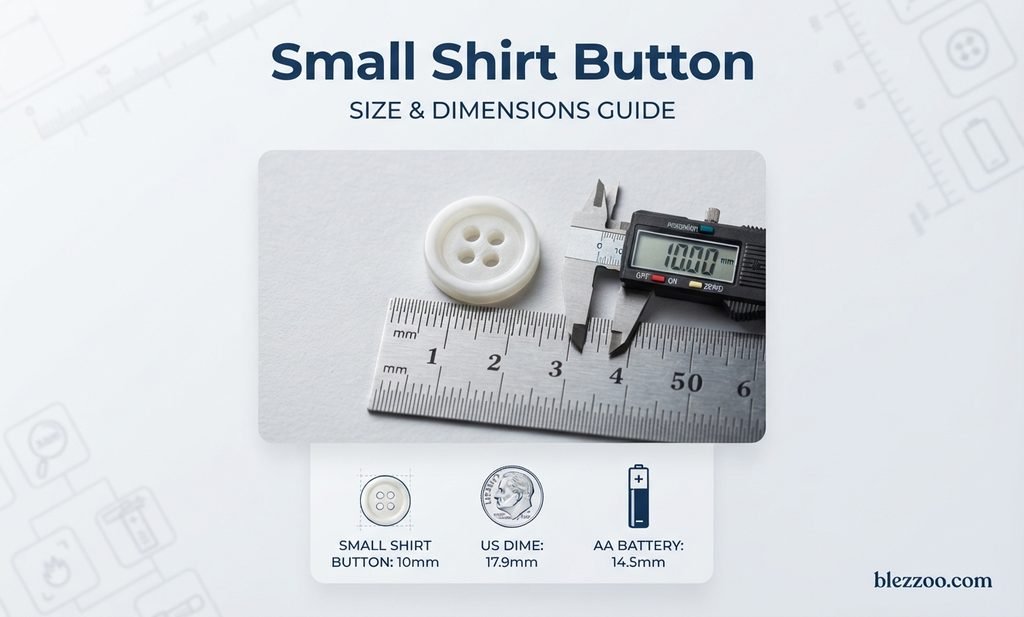
Small shirt buttons are often used on cuffs, collars, and lightweight clothing. An 8mm button is a practical example of a compact circular object.
Button sizes are usually measured across the face. When checking a garment, measure the button itself rather than the distance between the sewing holes.
USB Type-C Plug Metal Shroud
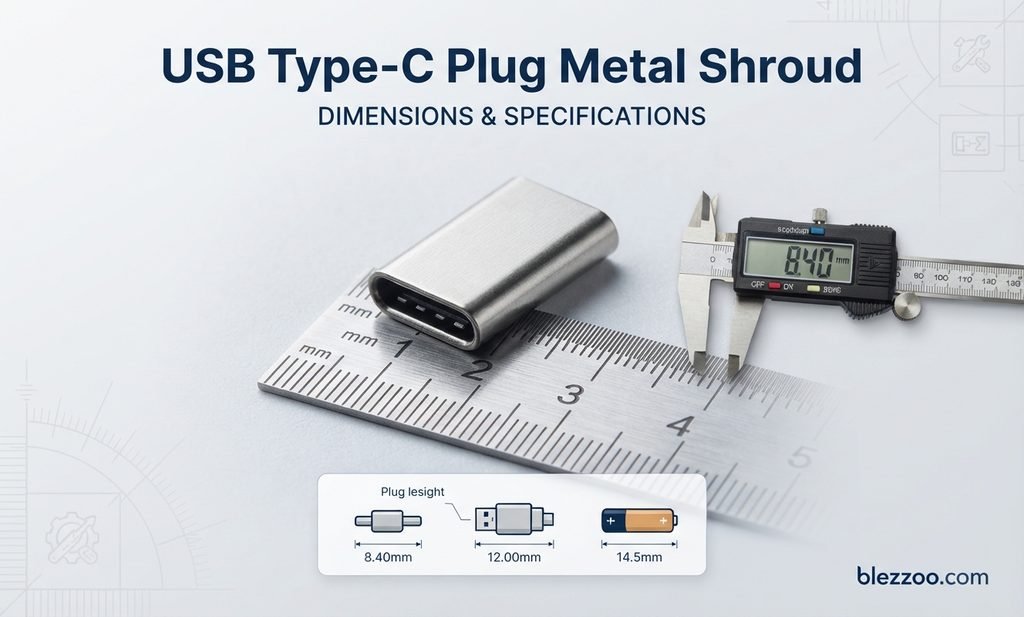
The metal shroud around a USB Type-C plug is a compact electronic component. Its dimensions are defined by connector specifications, but the outer width can serve as a rough visual comparison for a measurement in this range.
Do not use the connector as a substitute for a ruler when checking fit or compatibility. USB-C ports and plugs have specific tolerances, and the exact dimensions matter for electronics.
Read more information on : How Long Is 6 Inches
8mm Film Strip
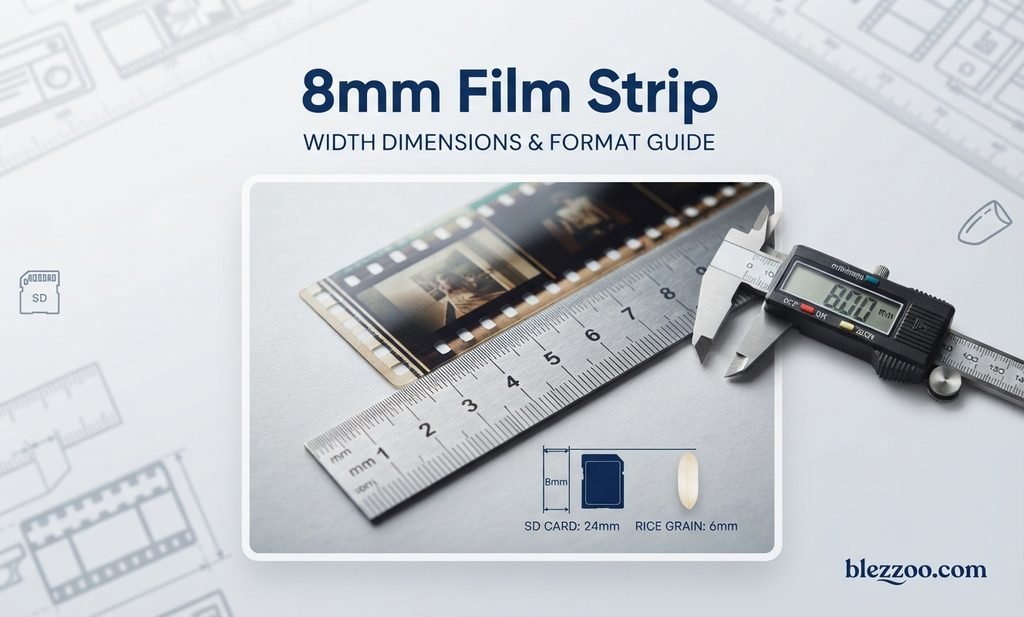
An 8mm film strip is one of the clearest examples because the format is named for its nominal film width. It was widely used for home movies and amateur filmmaking.
Unlike a blueberry or fingernail, the film format gives a defined measurement. It is a direct way to picture how narrow eight millimeters looks on a physical strip.
Common Snap Fastener

Snap fasteners are press closures found on jackets, shirts, bags, and craft projects. Their cap diameters come in different sizes, and some small versions are close to eight millimeters.
Measure across the circular cap to compare it fairly. The complete fastener may include several parts, so its overall height is not the same as its diameter.
Adult Pinky Fingernail
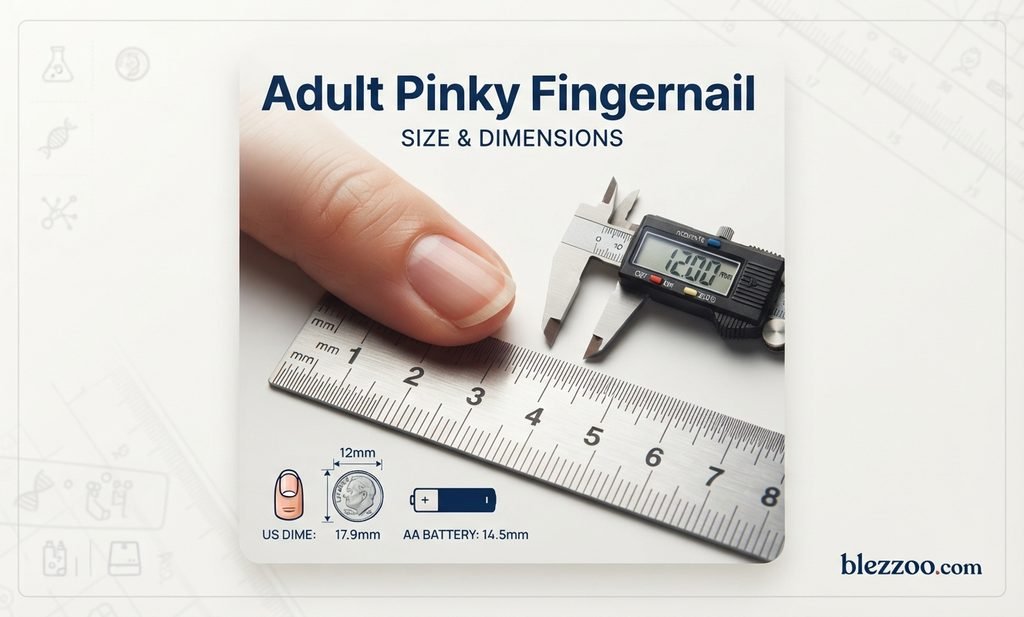
An adult pinky fingernail can help you visualize a small width, but nail size varies considerably from person to person. Some may be close to eight millimeters across, while others are wider or narrower.
Look at the nail from above and compare its widest point. This is a personal reference only, not a standard body measurement.
Cultured Pearl
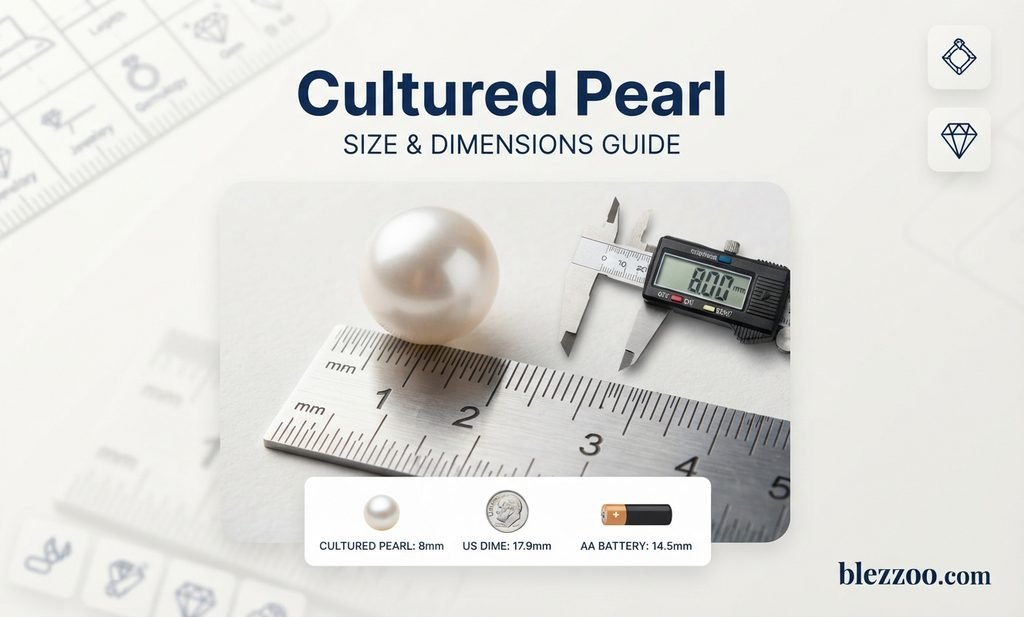
Cultured pearls are commonly sold by diameter, and 8mm is a familiar size in necklaces and earrings. A pearl of this size is visible without being exceptionally large.
Jewelry listings usually state pearl diameter in millimeters. This makes an 8mm pearl a helpful, clearly labeled example when comparing small round objects.
M5 Hex Nut

An M5 hex nut is a metric fastener designed to fit an M5 bolt. In common standard dimensions, the width across its opposite flat sides is 8mm.
This is one of the strongest hardware comparisons because the across-flats dimension is specified rather than estimated. Do not confuse that width with the nut’s height or thread diameter.
Masonry Wall Plug

An 8mm masonry wall plug is a common anchor used for fixing screws into suitable masonry. The stated size generally refers to the plug’s nominal diameter, not its length.
Always match the plug, drill bit, screw, and wall material according to the manufacturer’s instructions. A correct diameter helps the anchor grip securely, but the right fixing also depends on load and substrate.
More Ways to Understand This Measurement
The 8mm Size is easier to remember when you know its metric and imperial equivalents. These figures make the 8mm Size easier to compare with product labels.
Millimeters to Centimeters
There are 10 millimeters in one centimeter. That means the 8mm Size is just below the centimeter mark.
Millimeters to Inches
One inch equals 25.4 millimeters. This conversion places the 8mm Size at just under one-third of an inch.
Is It Closer to a Quarter Inch or Half Inch?
It is closer to a quarter inch than to half an inch. A quarter inch is 6.35mm, while half an inch is 12.7mm.
Practical Tips for Measuring 8mm

If accuracy matters, use a metric ruler, digital caliper, or suitable measuring gauge. This is the best way to confirm the 8mm Size rather than relying on appearance.
- Measure the correct dimension: Diameter, width, thickness, and length are different.
- Keep the tool straight: Align the ruler with the object’s edges.
- Avoid estimating flexible items: Straws and plastic parts can compress.
- Check product specifications: Especially for fittings, connectors, and hardware.
- Measure more than once: Repeat the reading if the edge is difficult to see.
Common Measurement Mistakes
When describing the 8mm Size, always state which side or surface you measured. A frequent mistake is assuming that every dimension of an object is eight millimeters.
A ring may be 8mm wide but have a much larger inner diameter, while a wall plug may be 8mm across but several centimeters long. Another mistake is treating natural objects as exact standards.
Chickpeas, berries, and fingernails are helpful visual examples, but their sizes are not uniform.
Choosing the Right 8mm Object Comparison
Different comparisons work best for different situations. Choose an 8mm Size example based on the object and the dimension you need to understand.
| Your purpose | Best comparison | Why it helps |
| Jewelry shopping | 8mm wedding band or pearl | Jewelry sizes are commonly listed in millimeters |
| Hardware selection | M5 hex nut or 8mm wall plug | Product dimensions are specified |
| Visual learning | Chickpea or blueberry | Familiar rounded objects are easy to picture |
| Film or media reference | 8mm film strip | The format gives a nominal width |
| Quick household estimate | Button or fingernail | Easy to find, but variable |
FAQs
What is 8mm in centimeters?
0.8 centimeters.
What is 8mm in inches?
Approximately 0.315 inches.
Is 8mm less than one centimeter?
Yes, by 2mm.
What common object is 8mm wide?
An M5 hex nut is 8mm across flats.
Is an 8mm pearl considered large?
It is a noticeable, common jewelry size.
Conclusion
Eight millimeters is a small but useful measurement found in jewelry, fasteners, film, clothing details, and many other products. The 8mm Size is equal to 0.8 centimeters and approximately 0.315 inches, giving you a simple conversion to remember.
For a dependable comparison, choose a labeled item such as an 8mm film strip, an 8mm pearl, or the across-flats measurement of an M5 hex nut. These examples make the 8mm Size easier to verify.
Everyday objects such as berries and buttons can help you picture the scale, but use a ruler or caliper whenever precision matters.
Read more information on : Three Inches










2 thoughts on “8mm Size: 13 Powerful Everyday Comparisons You Can Picture”