
Understanding distance becomes much easier when you connect numbers with familiar places and everyday objects. Whether you are walking across a large property, measuring a field, or estimating the distance between two locations, knowing How Far Is 500 Feet is can give you a practical sense of space.
This guide explains the distance through simple conversions, walking examples, common objects, and real-world measurements. You will also learn how to estimate it without using special measuring equipment.
What 500 Feet Feels Like on Foot
Walking 500 feet is a relatively short journey, but it is long enough to notice the distance between two separate locations. It is approximately the length of one and a half football fields, including their end zones.
For most adults, walking this distance takes around 1.5 to 2 minutes at a comfortable pace.
Here is what the distance feels like in everyday situations:
- Walking: Around 125 to 170 ordinary walking steps.
- Running: Approximately 30 to 45 seconds at a moderate running pace.
- Driving: A short distance that takes only a few seconds at low speed.
- Sports field: About 1.5 football fields in length.
- City streets: Roughly one to two average city blocks, depending on the area.
The exact experience depends on your walking speed, stride length, and surroundings.
Why does 500 feet feel longer than expected?
When you look at a How Far Is 500 Feet stretch from one end, the opposite point may appear surprisingly close. However, walking the entire distance makes the actual length easier to appreciate.
The 500 Feet Conversions Clean and Simple
Understanding different measurement units makes distance comparisons easier. If you work with construction measurements, property dimensions, sports fields, or road distances, converting feet into other units can be especially useful.
Here are the most important conversions for How Far Is 500 Feet:
| Measurement Unit | Equivalent Distance |
| Feet | 500 feet |
| Inches | 6,000 inches |
| Yards | 166.67 yards |
| Meters | 152.4 meters |
| Kilometers | 0.1524 km |
| Miles | 0.0947 miles |
| Centimeters | 15,240 cm |
A few conversions are particularly easy to remember:
- 500 feet = 166.67 yards
- 500 feet = 152.4 meters
- 500 feet = 0.0947 miles
- 500 feet = 6,000 inches
Conversion note: 1 foot equals 12 inches, 3 feet equal 1 yard, and 1 foot equals 0.3048 meters.
How to Calculate 500 Feet in Other Units
You do not need an online calculator to understand these conversions. Simple multiplication and division can give you accurate results.
Feet to meters:
Multiply 500 by 0.3048.
500 × 0.3048 = 152.4 meters.
Feet to yards:
Divide 500 by 3.
500 ÷ 3 = 166.67 yards.
Feet to miles:
Divide 500 by 5,280.
500 ÷ 5,280 = 0.0947 miles.
These formulas are useful whenever you need to compare measurements across different systems.
How Many Blocks Is 500 Feet?
The number of city blocks covered by How Far Is 500 Feet depends on the street layout and the average block length. Not every city follows the same planning system.
In some neighborhoods, a block may measure approximately 250 feet. In other locations, it may extend 400 feet or more.
Here is a simple comparison:
| Average Block Length | 500 Feet Equals |
| 200 feet | 2.5 blocks |
| 250 feet | 2 blocks |
| 300 feet | 1.67 blocks |
| 400 feet | 1.25 blocks |
| 500 feet | 1 block |
For a general estimate, 500 feet is often around one to two city blocks.
Why City Block Sizes Differ
Several factors influence the length of a city block:
- Urban planning: Older cities may have irregular street layouts.
- Road design: Major roads can create larger blocks.
- Building density: Residential neighborhoods may have shorter blocks.
- Geography: Hills, rivers, and other natural features can change street patterns.
If you are estimating a walking route, always consider the actual street layout instead of assuming every block has the same length.
10 Daily-Use Things That Are 500 Feet Long
One of the easiest ways to understand a large measurement is to compare it with familiar objects. Although most household items are much shorter, commercial supplies and combined everyday objects can help create a useful How Far Is 500 Feet comparison.
The following examples represent products or combinations that reach approximately 500 feet when supplied or arranged in the specified lengths.
A Standard Spool of Paracord (550 Cord)
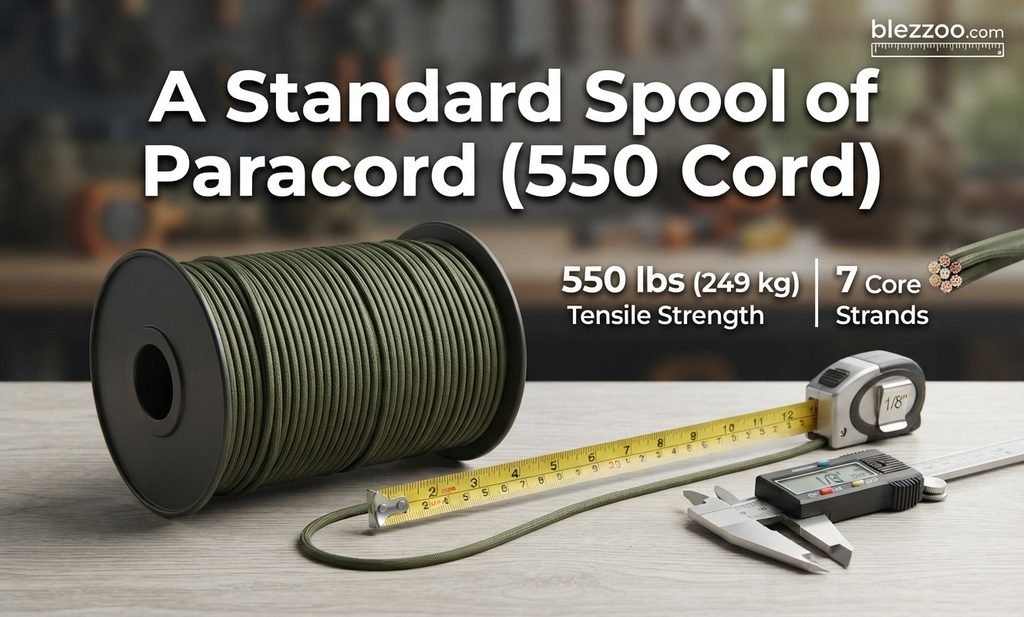
Paracord is a lightweight nylon rope commonly used for camping, outdoor activities, survival kits, and general utility work.
Some manufacturers sell paracord in How Far Is 500 Feet spools. When fully unrolled, that single spool provides a direct example of How Far Is 500 Feet.
Where it is useful:
- Camping and outdoor activities.
- Securing lightweight equipment.
- Craft and DIY projects.
- Emergency preparedness.
Remember that 550 cord describes its advertised tensile strength category, not its length.
A Contractor Roll of Caution Tape

Caution tape is frequently used at construction sites, public events, maintenance areas, and restricted locations.
Some rolls are available in 500-foot lengths, making them useful for visualizing this measurement.
Imagine stretching the entire roll in a straight line. The tape would cover a distance of How Far Is 500 Feet from beginning to end.
Common uses include:
- Marking restricted areas.
- Identifying temporary hazards.
- Separating construction zones.
- Controlling pedestrian access.
A Bulk Box of Cat6 Ethernet Cable

Cat6 Ethernet cable is widely used for networking, office installations, and residential internet connections.
Bulk cable boxes commonly contain How Far Is 500 Feet of cable, although other lengths are also available.
If you pull the entire cable from its box and arrange it along a straight path, it gives you a practical example of How Far Is 500 Feet.
Why this comparison matters:
Electricians and network installers regularly work with long cable runs. Understanding the total length helps with planning installations and reducing unnecessary waste.
A Large Roll of Industrial Stretch Wrap

Industrial stretch wrap is used to secure products, protect packages, and stabilize pallet loads during transportation.
Many commercial rolls contain more than How Far Is 500 Feet of film. A roll specifically labeled as 500 feet provides a direct comparison.
Unlike ordinary household plastic wrap, industrial stretch film is designed for demanding packaging applications.
It is commonly found in:
- Warehouses.
- Shipping facilities.
- Distribution centers.
- Manufacturing businesses.
A Spool of Steel Picture Hanging Wire

Steel picture hanging wire is commonly used to hang framed artwork, mirrors, and decorative items.
Some bulk spools are available in lengths of How Far Is 500 Feet. Although an individual picture requires only a small section, the complete spool contains a surprisingly long amount of wire.
This example demonstrates how small materials can add up to a considerable distance.
A Contractor-Grade Garden Hose

Most ordinary garden hoses are much shorter than 500 feet. However, commercial watering systems and contractor-grade hose arrangements can reach this length.
For example, five connected 100-foot hose sections create a combined length of 500 feet.
These longer arrangements may be useful for:
- Large gardens.
- Agricultural properties.
- Landscaping projects.
- Commercial cleaning operations.
Read more information on : How Long Is 20 Feet
100 Standard 5-Foot Step Ladders

A typical five-foot step ladder provides a useful measurement comparison when several ladders are placed end to end.
If you arrange 100 ladders in a straight line, each measuring exactly five feet in length, their combined length becomes How Far Is 500 Feet.
The calculation is simple:
100 × 5 feet = 500 feet.
This example makes a long distance easier to imagine because a step ladder is a familiar object found in homes, workshops, and construction environments.
A Commercial Plotter Paper Roll
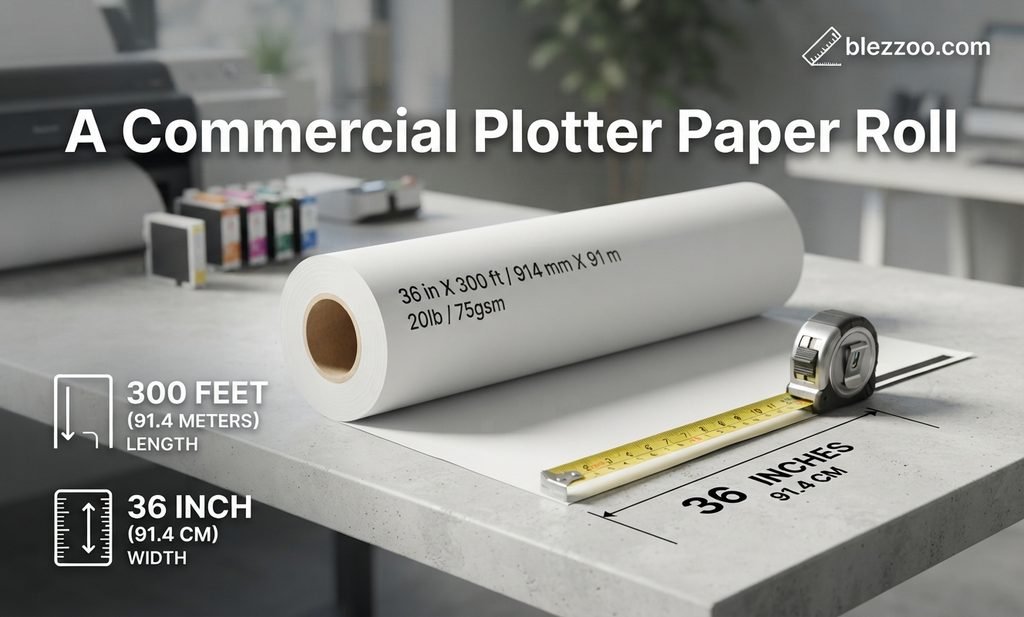
Commercial plotter paper is used by architects, engineers, designers, and printing businesses to produce large-format drawings.
Some paper rolls are manufactured in lengths of How Far Is 500 Feet or more, depending on their specifications.
A fully unrolled 500-foot paper roll would create a long strip that could stretch across a substantial indoor or outdoor space.
It is especially useful as a comparison because the material is lightweight but occupies a considerable distance when extended.
Five Standard 100-Foot Zip Lines
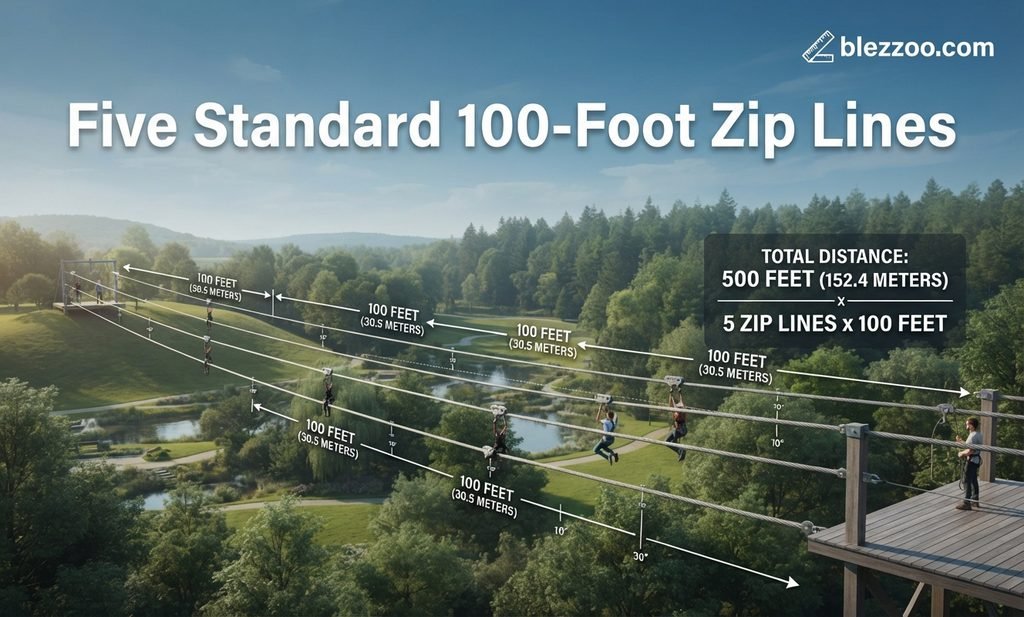
Zip lines are popular attractions at adventure parks, outdoor recreation centers, and campsites.
A 100-foot zip line is a convenient comparison for understanding larger distances.
When five 100-foot sections are placed end to end, the total becomes:
5 × 100 feet = 500 feet.
This does not mean that five separate zip lines can automatically be connected for safe use. It is simply a mathematical comparison of their combined lengths.
Ten City Transit Buses

A typical full-size city transit bus is approximately 40 to 50 feet long, depending on its model and design.
For a simple 500-foot comparison, imagine ten buses that are each exactly 50 feet long.
10 × 50 feet = 500 feet.
If those buses were parked bumper to bumper in a straight line, their combined length would help you visualize this distance.
This is one of the easiest examples to remember because buses are familiar features of many urban environments.
How to Estimate 500 Feet Without Any Tools

You do not always need a measuring tape, laser distance meter, or GPS device to estimate a distance. A few simple techniques can help you get reasonably close to 500 feet.
These methods are especially helpful when walking through parks, construction sites, outdoor spaces, or unfamiliar neighborhoods.
Count Your Steps
Counting your walking steps is one of the simplest ways to estimate distance.
An average adult walking stride may cover approximately 2.5 feet, although individual stride lengths vary.
Using that estimate:
500 ÷ 2.5 = 200 steps.
Therefore, around 200 ordinary walking steps may cover 500 feet.
For a more accurate estimate, measure a known distance of 100 feet and count your steps across it. You can then multiply that step count by five.
Use Your Car’s Trip Meter
A vehicle’s trip meter can help estimate longer distances when driving.
Most modern cars display distance in miles or kilometers. Since 500 feet equals approximately 0.0947 miles, you can use that value as a reference.
Follow these steps:
- Reset your trip meter before moving.
- Drive slowly in a safe, appropriate area.
- Watch the displayed distance.
- Stop when the reading reaches approximately 0.095 miles.
This method works best for estimating distance along a road or driveway. Always follow traffic laws and avoid watching the display while driving.
Walk and Count Seconds
Another practical method is to estimate distance using your walking speed.
A comfortable adult walking speed is approximately 3 miles per hour, which equals about 4.4 feet per second.
At that speed, covering 500 feet takes approximately:
500 ÷ 4.4 = 114 seconds.
That is about 1 minute and 54 seconds.
Your actual time may differ depending on your pace, terrain, footwear, and physical condition.
Where 500 Feet Shows Up in Real Regulations
The measurement of 500 feet can appear in several practical and regulatory situations. It may be relevant to construction planning, land surveys, public safety, transportation, and property management.
However, it is important to understand that 500 feet is not a universal legal threshold. Specific requirements depend on local laws, building codes, zoning regulations, and the type of property or activity involved.
Here are some areas where this measurement may matter.
Construction and Building Projects
Construction professionals regularly measure distances when planning equipment placement, temporary barriers, utility routes, and site access.
A 500-foot measurement can help contractors understand the scale of a project area and estimate the materials needed.
Property Boundaries and Land Surveys
Land surveyors use precise measurements to establish property lines, identify boundaries, and prepare site plans.
When a property measurement reaches 500 feet, accurate surveying equipment is important because visual estimates can be misleading.
Fire Safety and Emergency Access
Fire safety regulations sometimes include distance requirements for emergency vehicle access, hydrants, building access, and other safety features.
A 500-foot distance may be relevant in particular projects, but the applicable rule must be checked against the local fire code and the property’s specific conditions.
Public Events and Crowd Management
Large outdoor events may require organizers to establish temporary boundaries, emergency routes, restricted zones, and pedestrian access areas.
A 500-foot measurement can help with event layout planning, although the actual legal requirements vary by location and event type.
Transportation and Road Planning
Road engineers use distance measurements to plan intersections, access points, pedestrian routes, and traffic management systems.
Understanding How Far Is 500 Feet can help people appreciate the space involved in these planning decisions.
FAQs
Is 500 feet a long distance?
It is a moderate walking distance.
How many yards are 500 feet?
Approximately 166.67 yards.
How many meters is 500 feet?
Exactly 152.4 meters.
How many miles is 500 feet?
Approximately 0.0947 miles.
How long does it take to walk 500 feet?
Usually around 1.5 to 2 minutes.
Conclusion
Understanding How Far Is 500 Feet becomes much easier when you compare it with familiar measurements, walking distances, and everyday objects. It equals 152.4 meters, 166.67 yards, and approximately 0.0947 miles.
You can visualize this distance as ten 50-foot buses, five 100-foot zip-line sections, or approximately 200 walking steps.
Read more information on : How Long Is 50 Feet








2 thoughts on “How Far Is 500 Feet? A Powerful Guide to Real-World Distance”